
Last storm season the SES recorded 440 storm incidents in Newcastle between Sept 2025 and April 2026. Spread across those eight months, which come to 242 days, that is about 1.8 call-outs a day in our city alone. That figure is our estimate: 440 divided by 242.
A damaging-winds warning for Newcastle did not wait for the season either. It landed on a winter afternoon in August, when the Bureau forecast peak gusts around 90 km/h.
So here is the short answer:
- Check that your windows and doors seal.
- Get broken glass repaired.
- Put away anything the wind can throw.
- Clear your gutters.
- Know which room you will shelter in.
Do it now, because storm season runs to April. Then keep the list where you can find it after that.
How busy was the last Hunter storm season?
SES storm incidents, September 2025 to April 2026
SES figures reported by the Newcastle Herald show more than 1200 storm incidents in the Hunter overall, with 313 in Cessnock and 186 in Maitland, alongside Newcastle's 440. Those three councils alone make 939 (our sum).
Across NSW, the SES responded to more than 23,416 incidents last season. Roughly 7,000 were fallen trees and more than 6,500 were leaking or damaged roofs. Together that is roughly 13,500 jobs, close to six in every ten. That share is our estimate: 13,500 divided by 23,416 is about 58 per cent.
Trees and roofs, then: the things directly above and around your windows.
NSW SES storm incidents, last storm season
A dry El Niño outlook does not change the picture. SES Commissioner Mike Wassing said: "Even in years where drier conditions may be expected, we can see severe storms with damaging and destructive winds, large hail, intense rainfall and localised flooding." The Bureau's point in the same report is that warm Tasman Sea temperatures mean coastal troughs and thunderstorms "can interrupt this dry period".
If it is the heat side of this El Niño that worries you, our guide to west-facing windows in an El Niño summer covers shading.
Why storm prep belongs in the house all year
Sources: NSW SES: Storm season, 2NM
The NSW SES defines storm season as September to April. Storm risk does not stop at the edge of those months: the SES says major storms can happen at any time of the year.
Monday 10 August showed it. The Bureau's warning, reported by 2NM, forecast damaging winds averaging 60 to 70 km/h with peak gusts around 90 km/h for the Hunter Valley including Newcastle, easing in the evening.
The Herald reported what followed:
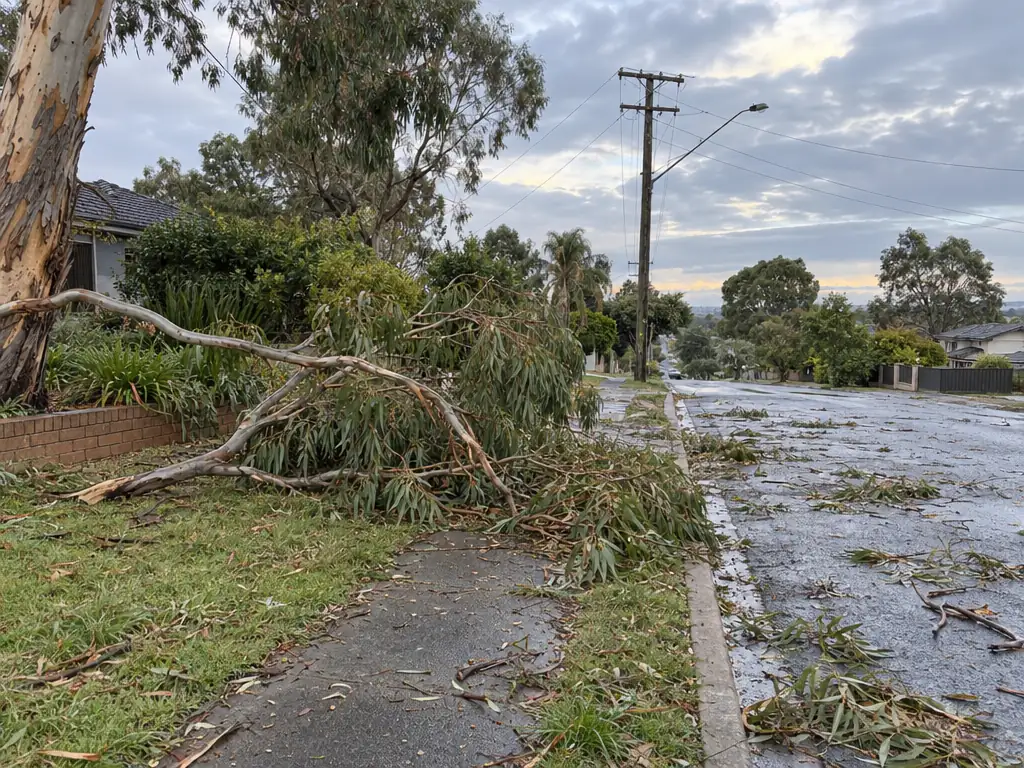
- Trees came down on Nelson Bay Road and the M1 near Cooranbong.
- Ausgrid had thousands without power, including Cardiff, Lambton, Wallsend and Charlestown.
The SES advice that day was a short list: move indoors, park cars in a safe area, put away outdoor items, monitor warnings.
That was winter. The checklist below is as useful in July as it is in January.
How do you check your windows and openings before damaging winds?
- 1Roof: loose tiles, metal sheets, screws.
- 2Gutters, downpipes, drains: blockages can push water under the eaves into the roof cavity.
- 3Windows and doors: check they seal properly, get previously broken windows repaired.
- 4Yard: outdoor furniture and trampolines, secure them or bring them indoors.
- 5Look up: branches that could fall on the roof, windows or driveway.
The checklist for windows and openings is short. The SES says getting ready could cost you a weekend of work around the home and yard. Here is that weekend, from the top down.
- The roof. Check the roof for loose tiles, metal sheets and screws. If that means a ladder you are not comfortable on, get a tradesperson to do it.
- Gutters, downpipes and drains. Clear gutters, downpipes and drains. Blockages can make water overflow under the eaves and into the roof cavity.
- Windows and doors. The SES says to check that your windows and doors seal properly and get any previously broken windows repaired. Open and close each one. If a shutter panel catches on the way, our guide to causes of sticking shutters covers the usual culprits.
- The yard. Outdoor furniture or items like a trampoline can become a hazard during high winds. The SES advice is to secure loose items and, where possible, bring items indoors. The Herald reports that authorities warn trampolines and outdoor furniture can quickly become dangerous projectiles in wild weather.
- Look up. Fallen trees made up roughly 7,000 of the SES's jobs last season. Note what hangs over your roof, windows and driveway. The SES says to trim trees and branches that could potentially fall on your home or property.
Two pieces of paperwork belong in the same weekend:
- NSW Government guidance says to confirm home and contents insurance is current.
- If you rent, raise maintenance concerns with the property manager or owner and keep copies of communications. The SES list above asks you to check that windows seal and to get previously broken windows repaired, so raise those too.
Before damaging winds: windows and openings
What does a storm warning look like, and how do you get one?
Australian Warning System
- Advice
- Watch and Act
- Emergency Warning
You may not always receive an official warning. Watch for darkening skies, increasing winds, thunder.
SES warnings use the Australian Warning System: Advice, Watch and Act, Emergency Warning. The levels rise in that order. Separately, the Bureau of Meteorology issues Severe Weather and Severe Thunderstorm Warnings, the kind of alert behind the damaging winds on 10 August.
A warning will not always reach you first. The SES is blunt about it: "You may not always receive an official warning". So watch for the natural signs: darkening skies, increasing winds, thunder.
Install the Hazards Near Me NSW app and set watch zones for the places you care about. Two numbers are worth saving in your phone today: for storm emergency help call 132 500, and for life-threatening emergencies call 000.
Which room should you shelter in when the wind arrives?
The SES puts it in one line: "The safest place during a storm is inside away from windows." Bring pets and children indoors and keep them away from windows.
NSW Government guidance narrows it further: determine the best room in your house to shelter, which would usually be the smallest room, with the least windows. Less glass around you means less glass that can break near you. Pick that room now, while the sky is clear.
The same NSW Government page, last updated in October 2023, adds advice for people who live in an area prone to severe storms:
- "install metal screens or shutters on windows for greater protection from high winds"
- "get a licensed builder to check your building's structural integrity against high winds"
From where we sit at Newcastle Shutters, one point is worth making plainly. That guidance is about metal screens or shutters for protection from high winds. It does not rate any product, and it does not say that interior shutters or blinds give that protection. Whether any protection suits your home, and anything to do with the building's structure, is a question for a licensed builder or a qualified assessor.
What should you check after the storm passes?
Source: NSW SES: During a storm
Once the wind drops, slow down before you walk back in.
- Check the property is structurally stable before entering. Then check windows, walls and roof, and be cautious of asbestos.
- Treat every fallen powerline as live: stay at least 8 metres (2 car lengths) away.
- If you have damage, contact your insurer as soon as possible to lodge a claim.
- Expect to wait for help. The SES may not be able to get to you immediately, so you may need to rely on yourself or your neighbours for a while. A conversation over the fence now is part of the preparation.
Storm season windows and openings at a glance
Before
- Storm season: September to April. NSW SES: Storm season
- Major storms can happen at any time of the year. NSW SES: Storm season
- Check windows and doors seal. NSW SES: Prepare your home
- Repair previously broken windows. NSW SES: Prepare your home
- Secure loose items. NSW SES: Prepare your home
- Clear gutters, downpipes and drains. NSW SES: Prepare your home
During
- Safest place is inside away from windows. NSW SES: During a storm
- Usually the smallest room, with the least windows. NSW Government: Prepare your home
- Hazards Near Me NSW. NSW SES: During a storm
- 132 500: storm emergency help. NSW SES: During a storm
- 000: life-threatening emergencies. NSW SES: During a storm
After
- Check the property is structurally stable before entering. NSW SES: Prepare your home
- Stay at least 8 metres (2 car lengths) from fallen powerlines. NSW SES: During a storm
- Contact your insurer as soon as possible. NSW SES: During a storm
Newcastle: 440 storm incidents, Sept 2025 to Apr 2026 Newcastle Herald
The figures and steps above, on one page to print and keep by the back door.
Your next step with Newcastle Shutters
Block out a weekend and walk the house with the checklist. Start at the roof, then the gutters, then every window and door, and finish in the yard. Then choose your shelter room and save the two numbers.
If the walk-around leaves you with questions about the coverings on a particular window, talk them through with Newcastle Shutters through our contact page. We would rather you asked before the next gust than after it. Anything about glass, frames or the building itself belongs with a glazier or a licensed builder.
Sources
- https://www.ses.nsw.gov.au/stormseason
- https://www.ses.nsw.gov.au/plan-and-prepare/prepare-your-home
- https://www.ses.nsw.gov.au/during-emergency/during-storm
- https://www.nsw.gov.au/emergency/storms/prepare-your-home
- https://www.2nm.com.au/local-news/ses-warns-of-damaging-winds-across-hunter-valley-today/
- https://www.newcastleherald.com.au/story/9326901/nelson-bay-road-motorists-clear-tree-in-wild-windy-weather/
- https://www.newcastleherald.com.au/story/9335964/hunter-residents-urged-to-prepare-as-ses-warns-of-el-nino-storms/