
Plantation Shutters for Newcastle Homes
A plantation shutter is a piece of joinery you'll live with for decades, so the decision deserves more than a colour chart. We work through material, louvre width and tilt for each room, tell you why, and then a local provider working with us measures and installs. The measure and the quote are free.
Five words and you can read any quote
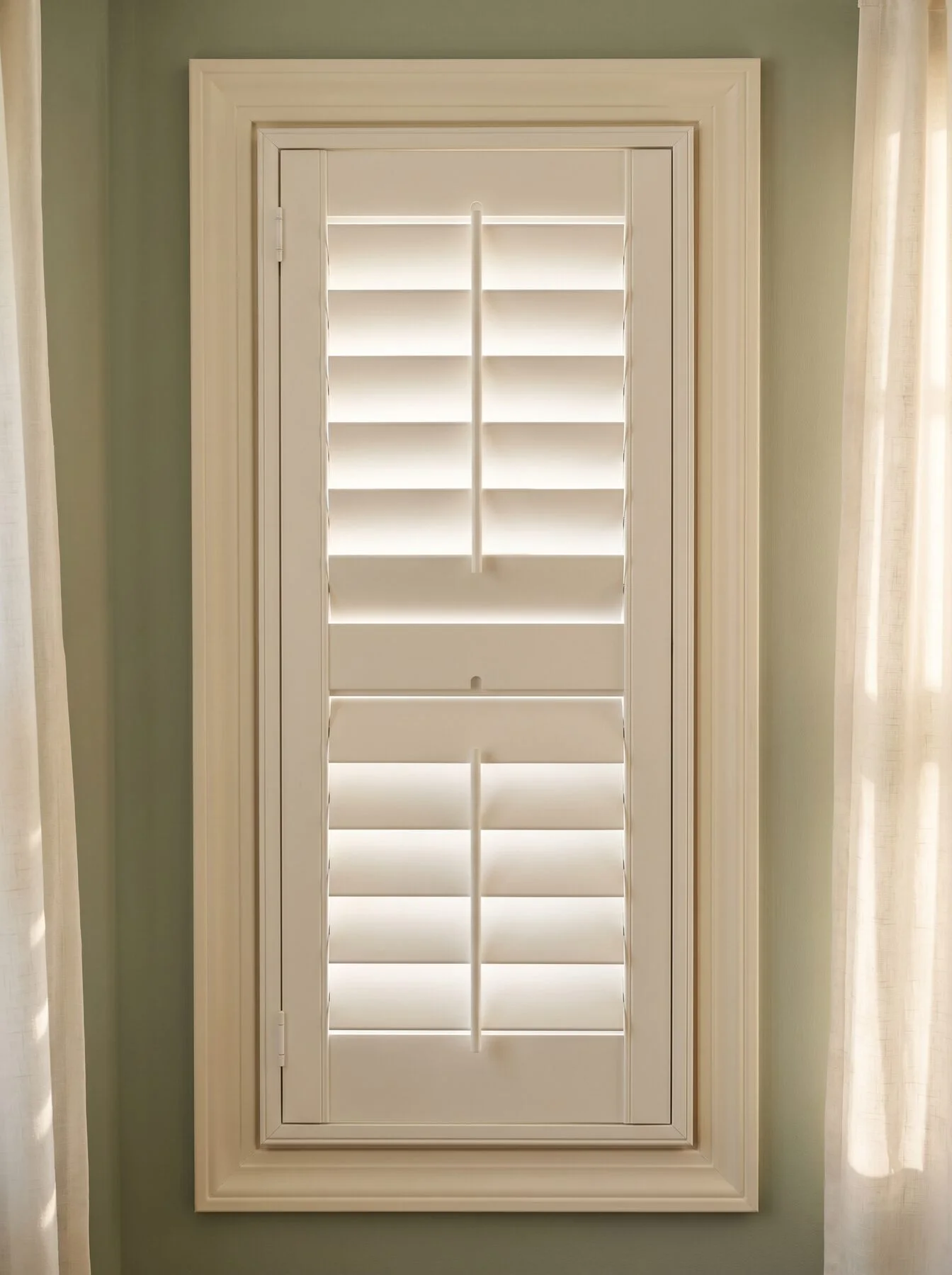
The louvres (some folks say blades) are the moving slats. The stiles are the vertical sides of the panel, the rails run across the top and bottom, and a mid-rail is the fixed horizontal bar that lets you tilt the top half separately from the bottom, which is the quiet hero of street-facing rooms. The tilt rod is what you move, front and centre on a traditional panel or hidden at the back edge on a modern one.
That's most of the vocabulary a shutter quote will ever use. The rest, frames, mounts and the odd trade word, is defined in plain English in What are shutters?
Material, louvre width, tilt. In that order.
Get these three right and everything else is finish and detail. Here's how we call them, with the full reasoning one click deeper.
1. Material follows the room
2. Louvre width follows the light
Wider louvres (89 to 114 mm) give bigger view slices, more light when open and fewer slats to dust, and they suit big modern openings. Narrower louvres (63 mm) sit better in small period sashes and give finer control over privacy. Most homes end up mixing widths between rooms, which is normal and right. The trade-offs are spelled out in the louvre width guide.
3. Tilt follows the house
A front tilt rod runs down the middle of the panel and reads traditional, which is exactly what a Cooks Hill sash wants. Hidden tilt moves the mechanism to the back edge for a clean modern face, which is what a Fletcher slider wants. Neither is better, they belong to different houses, and we've written the whole question up in front tilt or hidden tilt.
Z-frame or L-frame, reveal or face
Every shutter hangs in a frame. An L-frame is the simple right-angle profile, neat inside a deep window reveal. A Z-frame wraps the edge of the opening like architrave and hides an out-of-square reveal, which older Newcastle houses have in abundance. Mounting in the reveal keeps the shutter flush and tidy; face mounting sits the frame proud on the wall when the reveal is shallow or the sash hardware is in the way.
You don't need to decide any of this from an article. The installer measures and recommends at the window, it's the part of the trade that's genuinely hands-on, and it's covered in plain terms in how installation works.
A shutter quote isn't a price for panels. It's a price for panels that fit your exact openings, square or not, which is why the measure comes first.
The rest of the shutter shelf
What are shutters?
The primer and the glossary. Interior and exterior, solid and louvred, every term defined once, properly.
Read the primer
Custom made shutters
Arches, fanlights, raked and round windows, bays and wide openings. The no-standard-window page.
Shaped and special windows
Window shutters
The wider family, interior and exterior, and where plantation shutters sit inside it.
The wider landscape
Installation
Measure, make, fit. What actually happens between your enquiry and the last panel clicking shut.
How the fit-out runsEvery good fit-out starts with a measure
Tell us about your windows and the rooms behind them. A local provider working with us will arrange a free in-home measure, talk through materials and louvre sizes on the spot, and quote the job properly. Every window is made to measure, so the quote comes after the tape, not before.
We don't publish a phone number. The form is our front door, and it means your details go straight to the people who will actually measure your windows.