
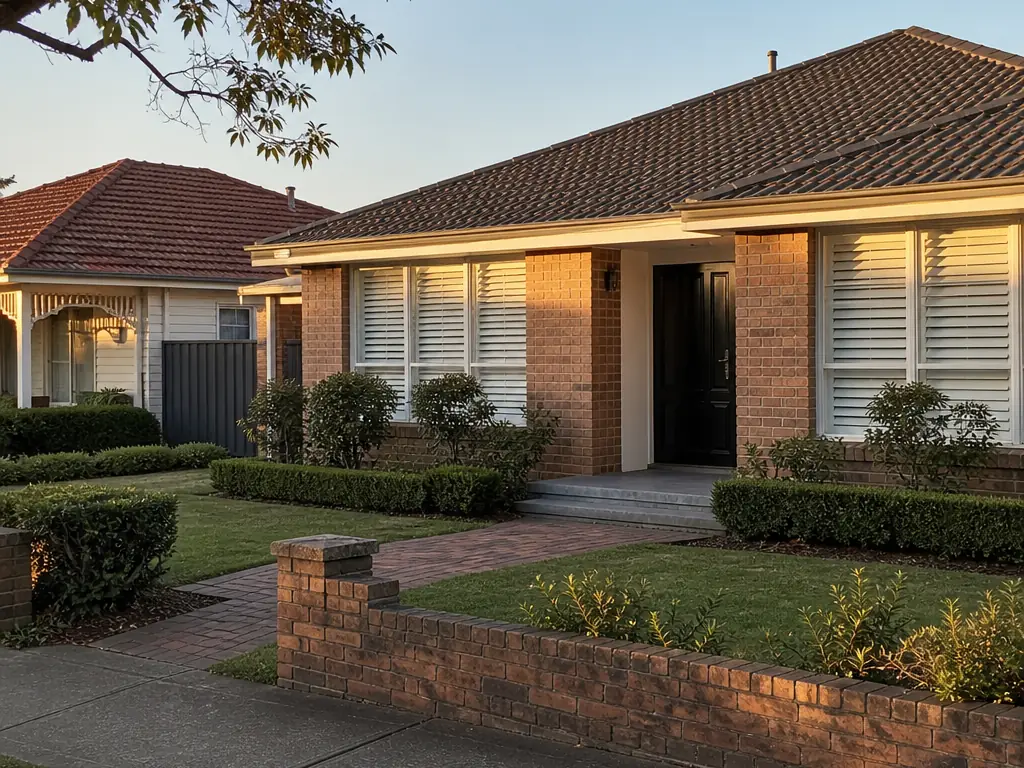
Home break-ins across regional NSW are neither rising nor falling. That is the honest read of the latest official numbers. BOCSAR's NSW Recorded Crime quarterly update for June 2026, released on 16 September 2026, marks break and enter on a dwelling as Stable over two years for NSW and for Regional NSW. The one fall, 5.8%, belongs to Greater Sydney. Newcastle and the Hunter sit outside it.
Put the 13 major offence categories side by side and only one rose significantly across NSW: steal from retail store, up 10.4%, and up 11.9% in Regional NSW. Break-ins on homes were not that one.
So the numbers give you no reason to panic and no reason to relax. What you control is how your house looks to someone deciding whether to try it. At Newcastle Shutters, that part is where we think your time is best spent, and most of it starts at the windows.
What "stable" means for break and enter in Newcastle
Two-year trend to June 2026
| Offence | NSW | Greater Sydney | Regional NSWNewcastle and the Hunter sit here |
|---|---|---|---|
| Break and enter dwelling | Stable | Down 5.8% | Stable |
| Break and enter non-dwelling | Stable | Stable | Stable |
| Robbery | Stable | Down 11.9% | Stable |
| Steal from motor vehicle | Stable | Down 4.2% | Stable |
| Steal from retail store | Up 10.4% | Up 9.5% | Up 11.9% |
Source: BOCSAR: NSW Recorded Crime, June 2026
Stable is not a polite word for good news, and it is not a warning either. BOCSAR reserves "up" and "down" for significant moves, which is why retail theft was the only category it called a significant increase. Stable means the two-year trend did not move enough to call either way. It says nothing about how many break-ins there are in your street.
The Sydney falls do not carry north. Robbery fell 11.9% and steal from motor vehicle fell 4.2% in Greater Sydney, but both were stable statewide and in the regions. The same goes for the 5.8% drop in home break-ins.
The longer view is kinder. BOCSAR's crime and policing page says "Over the ten years to June 2026, property crime fell substantially across NSW", and that Regional NSW crime rates were "generally stable" over the past two years.
If you have noticed more charges in the news, BOCSAR reads that separately. Police-initiated adult court proceedings rose 11.6% in two years, against average annual growth of 2.7% over ten years, driven by driving offences, domestic violence and drug possession. BOCSAR says this "suggests police are detecting and acting on more incidents, rather than responding to a broad increase in recorded crime". By our estimate, 2.7% a year compounds to about 5.5% over two years, so the recent rise is roughly double the usual pace. That is a measure of policing, not of break-ins.
Where to look up your own suburb
- Newcastle
- Lake Macquarie
- Maitland
- Cessnock
- Port Stephens
- Dungog
- Singleton
- Muswellbrook
- Upper Hunter
Five breakdowns offence type, premises, time of day, day of week, month
Next update: December 2026
BOCSAR: LGA Excel crime tablesThe regional figure is a wide lens. For your own area, BOCSAR publishes a free Crime Mapping Tool and a Crime trends dashboard.
For more detail, its LGA Excel crime tables have a separate download for Newcastle, Lake Macquarie, Maitland, Cessnock, Port Stephens, Dungog, Singleton, Muswellbrook and Upper Hunter. Each breaks offences down by premises, time of day, day of week and month. The page says "All tables will be updated next in December 2026", so a fresh local read is coming before the end of the year.
How burglars choose a house
The view from the footpath
Four cues on show
The same block, cues removed
- 1An unlocked window or door (easy access)Window shut
- 2Overgrown shrubs beside a side window (cover)Shrubs cut low
- 3A side corner that no sightline reaches (hidden from the road or neighbours)Inside a neighbour's sightline
- 4A front window with valuables in view (easy to conceal and sell)Nothing on show
The research on this is plain, and it is mostly about what can be seen from the street. Edith Cowan University criminologists, writing via The Conversation and ABC News, found burglars choose houses that are easy to get into. They look for unlocked windows and doors, cover such as overgrown plants, and spots hidden from the road or neighbours. They want valuables that are easy to conceal and sell.
Opportunistic burglars choose easy to access properties, stay a minimum length of time and take goods that can be disposed of easily.
An older Western Australian study of 69 active burglars, published by the Australian Institute of Criminology in 2014, reached the same place: opportunists pick easy properties, stay as briefly as they can, and take goods they can get rid of. It also concluded that simple prevention can reduce the risk. It is one state and a decade old, so read it as a pattern rather than a local measure.
The same paper cites a UK study of 50 ex-burglars in which homes with no visible security took as little as two minutes to break into. The top homeowner mistakes it found were open windows, valuables in view, keys hidden by doorways, and parcels or mail left out.
Two of those four are about windows. None of them cost anything to fix.
Opportunists, searchers and planners: what puts each off
| Burglar type | What puts each off |
|---|---|
| Opportunists | Keep valuables out of sight. |
| Searchers | Lock doors and windows, remove hiding places near entries. |
| Planners | Put off by alarms and sophisticated security, and often recognise a decoy camera. |
| Disliked by the burglars interviewed: dogs, alarms, neighbours, anything that could identify them, such as a camera. | |
The ECU research splits burglars into types, and each responds to something different. Opportunists are put off when valuables are out of sight. Searchers are put off by locked doors and windows and by having no hiding places near entries. Planners are put off by alarms and sophisticated security, and often recognise a decoy camera.
Across all of them, the people interviewed disliked dogs, alarms, neighbours and anything that could identify them, such as a camera. Most of that list is about being seen.
Home security in Newcastle: where windows and shutters fit
The NSW Government's evidence-based crime prevention strategies name "Access control and awareness campaigns" as the approach for break and enter on a dwelling. For a household, that translates to two habits: make the openings hard to use, and know what your house shows the street.
Window coverings sit in the second habit. A closed or tilted set of window shutters lets daylight in while keeping the room behind it out of view from the footpath, so a laptop on the dining table isn't on display. That is a visual layer, not a lock. It works alongside locked windows, trimmed garden beds, neighbours who can see your front door, and whatever alarm or camera you choose. Grilles and screens are a separate, physical layer again.
No covering, grille or camera guarantees anything, and anyone who tells you otherwise is selling. The honest claim is smaller: each layer removes one of the cues the research says burglars look for.
One balance matters more than any of it. However you secure your windows, make sure every room keeps an escape route and the keys are accessible. The same openings matter in a storm too, which we cover in Damaging winds in the Hunter: windows and openings.
Before the festive break: a window and home checklist
The ECU research notes that burglary rates tend to rise over the festive season, when homes hold new gifts and are more likely to be empty. A short list before you leave:
- Lock every window and door (ABC News), the small bathroom and laundry windows included.
- Keep new gifts and valuables out of sight of the street (ABC News).
- Don't leave a key hidden by the door, one of the top homeowner mistakes in the UK study.
- Ask someone to collect parcels and mail, another of those top mistakes.
- Don't announce holiday plans on social media (ABC News).
- Check every room still has a way out, with keys where the household can reach them.
Break and enter Newcastle: the short version
What the numbers say
- Break and enter dwelling, Regional NSW, two years to June 2026: Stable BOCSAR
- Greater Sydney: Down 5.8% (not Newcastle) BOCSAR
- Steal from retail store, Regional NSW: Up 11.9% BOCSAR
- Ten years to June 2026: "property crime fell substantially across NSW" BOCSAR: crime and policing
- LGA tables next updated December 2026 BOCSAR: LGA tables
Home break-ins in Regional NSW are stable over two years, and the Sydney fall does not apply here. Property crime fell substantially over ten years. Your own LGA's figures are a download away, refreshed in December 2026. And the research keeps pointing at the same four cues: easy access, cover, being hidden, and valuables on show.
Your next step: walk the footpath, then talk to us
Stand on the footpath this weekend and look at your house the way the research describes. Which windows show the inside of a room? Which ones sit behind a shrub where nobody can see them?
If a front or side window is the weak spot, Newcastle Shutters can talk you through the options for that room, starting with Talk It Through, or you can book a measure and quote and we'll look at the windows with you.
Sources
- https://bocsar.nsw.gov.au/media/2026/mr-nsw-recorded-crime-statistics-quarterly-update-jun-2026.html
- https://bocsar.nsw.gov.au/statistics-dashboards/crime-and-policing.html
- https://bocsar.nsw.gov.au/statistics-dashboards/crime-and-policing/lga-excel-crime-tables.html
- https://www.abc.net.au/news/2022-12-28/christmas-holiday-season-for-your-home-to-be-burgled-keep-safe/101810282
- https://www.aic.gov.au/publications/tandi/tandi489
- https://www.nsw.gov.au/legal-and-justice/preventing-or-reporting-crime/information-for-councils/resources-evidence-based-crime-prevention-strategies